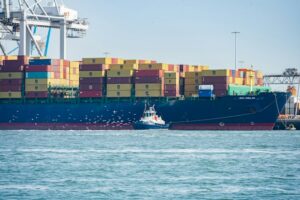
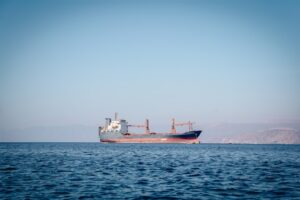
The risk of conflict in the Strait of Hormuz constitutes a multi-layered legal issue which cannot be reduced to a mere matter of security; rather, it directly affects the scope of insurance cover, freight relations, and the operation of charterparty agreements. The recent increase in geopolitical tensions in and around the Strait has given rise to consequences that go beyond classical risk assessment in maritime trade. These developments impact not only the safe passage of vessels, but also the scope of insurance cover, additional war risk premiums, routing decisions, and the contractual allocation of risk between the parties. Accordingly, the issue is no longer whether a vessel will transit the region; the real question is how the legal and economic consequences arising from such transit are to be allocated between the owner and the charterer.
What Does War Risk Mean in the Context of the Strait of Hormuz?
War risk refers to the likelihood that the vessel, cargo, or crew may be exposed to war, armed conflict, hostile acts, attacks, seizure, or similar acts of political violence. In the context of the Strait of Hormuz, this risk has ceased to be theoretical and has become a concrete factor that must be taken into account in the performance of contractual obligations. Recent developments indicate that, although the Strait remains legally open, it has in practice turned into a high-risk transit area, a situation that may be described in doctrine as a “de facto closure.” Accordingly, directing a vessel to this region is not merely a routing decision, but one that may increase insurance costs and alter contractual obligations. In modern charterparty practice, this risk is addressed through clauses such as VOYWAR and CONWARTIME.
Separation of the Insurance Regime
In marine insurance law, the distinction between Institute Time Clauses (Hull 83) and Institute War and Strikes Clauses clearly demonstrates that war risk is subject to a separate insurance regime. While marine risks include perils such as fire, explosion, collision, natural disasters, and traditional maritime hazards, war risks encompass war, civil war, rebellion, hostile acts, seizure, sabotage, and terrorism. As a consequence of this distinction, losses arising from war risks are generally not covered under standard hull policies, but are instead addressed under separate war risks policies, giving rise to additional war risk premiums (AWRP). Particularly in high-risk regions such as the Strait of Hormuz, insurers tend not to withdraw cover entirely, but rather to reprice the risk and subject cover to prior approval and additional conditions. This, in turn, directly impacts charterparty relations and necessitates a reassessment of the allocation of financial burdens between the parties.
Does Insurance Cease to Exist in Hormuz?
In practice, insurance does not cease to exist; however, it becomes more expensive, more limited, and more conditional. Rather than withdrawing cover, the insurance market responds to such crises by repricing risk, resulting in additional war risk premiums, notification requirements, and stricter underwriting procedures. Accordingly, the legal debate does not focus on whether insurance exists, but rather on how these additional costs are allocated between the parties under the relevant contractual framework.
How Does War Risk Affect Voyage Charterparties?
In voyage charterparties, war risk gives rise to different legal consequences depending on the stage of the voyage. Whether loading has not yet commenced, is ongoing, or has been completed will directly affect the owner’s discretion and the charterer’s obligations. In this respect, VOYWAR clauses play a decisive role, with risk assessments generally left to the reasonable judgment of the owner, and contractual obligations being reshaped where the risk increases.
A. What Are the Owner’s Rights If Loading Has Not Yet Commenced?
If loading has not yet commenced, the owner may refuse to undertake a voyage that would expose the vessel to serious war risk, or may request that the charterer nominate a safe alternative port. Under VOYWAR provisions, failure by the charterer to provide such alternative instructions within a reasonable time may entitle the owner to terminate or decline performance. The owner is not obliged to perform the contract at all costs, but rather to avoid exposing the vessel to unreasonable danger.
B. What Happens If the Risk Arises During Loading?
If loading has commenced and the war risk becomes serious at that stage, the owner may suspend loading and request further instructions from the charterer. Modern VOYWAR clauses typically provide a time frame of 48 to 72 hours for such instructions. If the charterer fails to respond within this period, the owner may be entitled to discharge the cargo at an alternative port or terminate the contract. Such actions are not considered a breach, but rather an exercise of contractual risk allocation.
C. Can the Route Be Changed After Loading Is Completed?
Even after loading has been completed, the owner may deviate from the agreed route to avoid serious war risks. In modern charterparty practice, such deviation is not treated as a breach, but as a legitimate protective measure. The current approach focuses not on fixed distance thresholds, but on a balance between risk and cost, with any additional time and expense being addressed through freight adjustment.
How Is Risk Allocated in Time Charterparties?
In time charterparties, risk allocation differs structurally from voyage charters. While the charterer determines the commercial employment of the vessel, the owner remains responsible for the safe operation of the vessel. Accordingly, a balance must be struck between compliance with the charterer’s orders and the obligation to ensure the vessel’s safety. CONWARTIME clauses are central in this regard, allowing the owner, under certain conditions, to refuse orders or adopt alternative routing.
Does War Risk Result in an Off-Hire Situation?
As a general rule, war risk does not automatically result in an off-hire situation. Under English law, the prevailing approach is that where the vessel continues to perform the charterer’s commercial service, even via an alternative route, hire remains payable. However, if the vessel becomes unusable, is detained for a prolonged period, or if the contract expressly provides otherwise, the outcome may differ.
Who Bears Additional War Risk Premiums and Related Costs?
In practice, additional war risk costs are generally borne by the charterer, as the vessel is directed to the risk area pursuant to the charterer’s commercial instructions. This includes not only insurance premiums, but also security costs and crew war bonuses. Modern carriage contracts (such as Maersk Clause 22 and MSC Clause 19) grant the carrier broad discretion to deviate, suspend performance, store cargo, or terminate the voyage, while preserving the right to claim freight and pass on additional costs.
Current contractual practice reflects the principle that the charterer should bear only the actual insurance cost incurred. Payment of the premium does not imply that it will be refunded if the risk does not materialise. However, any rebate, discount, or no-claim benefit provided by the insurer is to be credited to the charterer.
How Does War Risk Affect Sale Contracts and Payment Obligations?
In commodity sale contracts, war risk has distinct implications for delivery and payment obligations. Under DAP terms, the seller is obliged to deliver the goods to the agreed destination, and risks in the Strait of Hormuz directly affect this obligation. However, under BP General Terms and Conditions 2015 (v1.2), clause 65, force majeure may affect delivery obligations, but does not automatically discharge payment obligations. This demonstrates that the legal consequences of war risk must be assessed separately for each contractual obligation.
Does War Risk Lead to Termination of the Contract (Frustration)?
The risk of war and the delays arising therefrom raise the question, in practice, of whether the contract is brought to an end. However, under English law, the doctrine of frustration is construed narrowly, and not every delay results in the automatic termination of the contract. In making this assessment, it is not only the duration of the delay that is taken into account, but also the nature of the contract, the allocation of risk between the parties, and whether performance remains possible.
One of the leading authorities in this regard is The Sea Angel. Although the dispute in question concerned a port services agreement rather than a charterparty, the principles established by the court are of broader relevance and provide guidance for maritime contracts generally. In that case, despite the vessel being detained for approximately 108 days, the court did not find that the contract had been frustrated. Instead, it placed particular emphasis on the commercial risks assumed by the parties under the contract and on whether performance remained feasible. The decision therefore demonstrates that, particularly in high-risk regions such as the Strait of Hormuz, delays caused by war risks do not, merely by exceeding a certain duration, lead to the automatic termination of the contract.
In this context, the approach adopted by the UK Supreme Court in The Polar is also of particular significance. The Court rejected the argument that the parties had agreed upon an “insurance code” under which they had waived claims against one another, emphasizing that such a conclusion would require clear and express contractual wording when the contract is considered as a whole. More importantly, the Court held that, for an owner to refuse a particular route on the basis of war risk, the risk must be qualitatively different from the risk contemplated at the time the contract was concluded. In the case at hand, the piracy risk in the Gulf of Aden was deemed to be a known and accepted risk at the time of contracting; accordingly, the owner was not entitled to rely on that risk to avoid performance or refuse the route. This reasoning is directly applicable to the Strait of Hormuz. Where the parties have entered into a contract with knowledge of a certain geopolitical risk, the subsequent materialization of that risk will not, as a rule, justify termination or non-performance.
Conclusion and Evaluation
The war risk in the Strait of Hormuz is no longer a peripheral issue in maritime trade, but a central component of the contractual relationship. Legal assessment must therefore extend beyond navigational safety and encompass insurance structures, charterparty clauses, risk allocation, cost distribution, and the scope of contractual obligations.
Modern contractual practice demonstrates that war risk is largely pre-allocated between the parties through contractual mechanisms. Clauses such as VOYWAR and CONWARTIME, together with insurance arrangements, indicate that parties enter into contracts with full awareness of such geopolitical risks. Accordingly, the mere occurrence of such risks does not, in itself, justify termination or avoidance of contractual obligations; the decisive factor remains whether the risk was foreseeable and to whom it was contractually allocated.
Recent case law reinforces this position. The restrictive interpretation of frustration under English law, together with the principles established in The Sea Angel and The Polar, clearly prioritises contractual risk allocation and party autonomy. Risks that were known and accepted at the time of contracting cannot, in principle, be invoked as grounds for termination.
In the context of the Strait of Hormuz, the key issue is therefore not whether vessels will transit the region, but how the legal and economic consequences of such transit are to be distributed between the parties. Disputes relating to additional war risk premiums, deviation, delay, and increased costs can only be resolved through a holistic assessment of contractual provisions, insurance frameworks, and the specific circumstances of each case.
Ultimately, the escalating geopolitical risk in Hormuz represents not merely a force majeure scenario, but a test of contractual risk management in maritime trade. The critical consideration for parties lies in the careful drafting of contractual provisions at the outset, and in their consistent interpretation in line with established legal principles. Only through such an approach can commercial predictability be maintained, even in high-risk regions.